Most contractors treat pricing like a state secret. You ask for a quote, and instead of a straight answer, you get a lengthy sales pitch. At that point, frustration sets in. You want to know if a new project is feasible for your budget right now, not weeks from now.
In Maryland, where permits and HOA rules are strict, the price involves more than just lumber and screws. This guide breaks down the financial landscape of building in the Mid-Atlantic, focusing on local data and the radical transparency homeowners deserve.
Universal Factors Driving Maryland Deck Prices
Every property in Laurel, Columbia, or Ellicott City presents a different puzzle. Universal factors dictate where your project falls on the price spectrum.
1. Material Selection: Wood vs. Composite
Lumber is the traditional choice, but in Maryland’s humid climate, maintenance becomes a constant chore.
- Pressure-Treated Wood: The lowest entry point. Expect to spend a significant amount on stains and sealers every 24 months to prevent rot.
- Composite (Trex, TimberTech, Fiberon): Higher upfront investment. It removes the need for sanding and painting. Local data shows most homeowners prefer composite for its resistance to warping and insect damage.
2. Height and Access
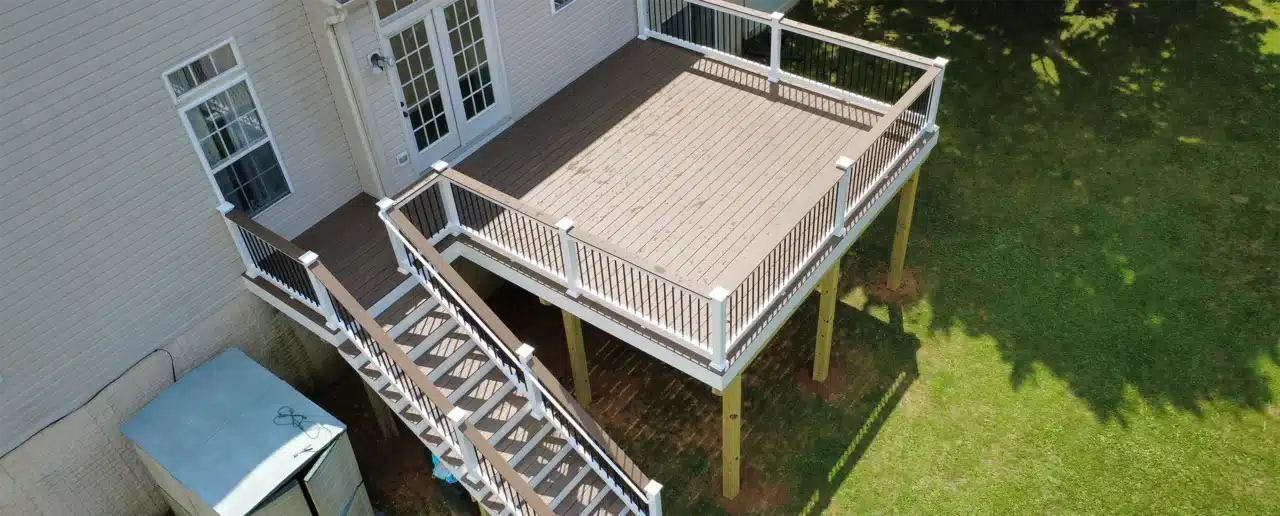
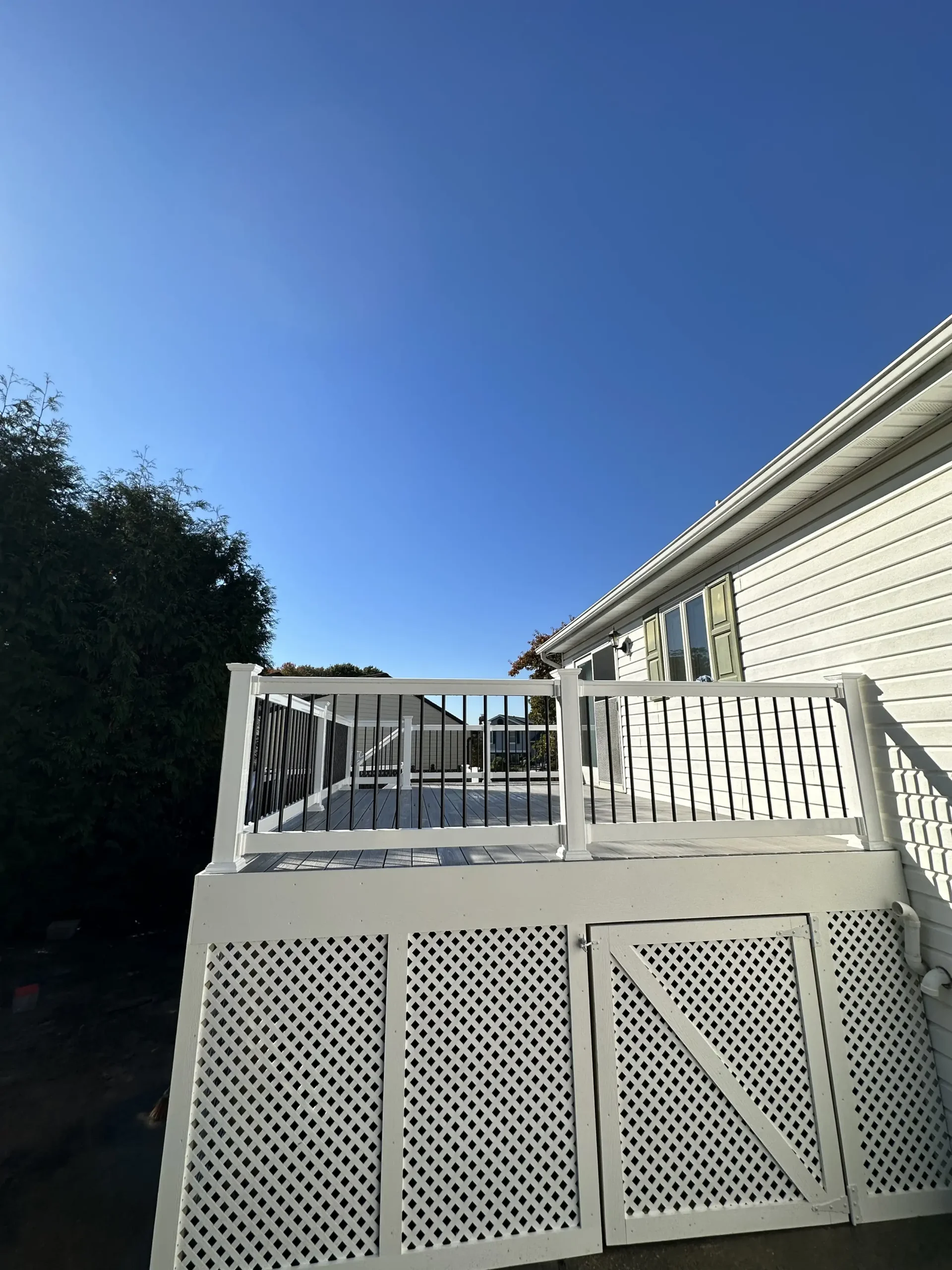
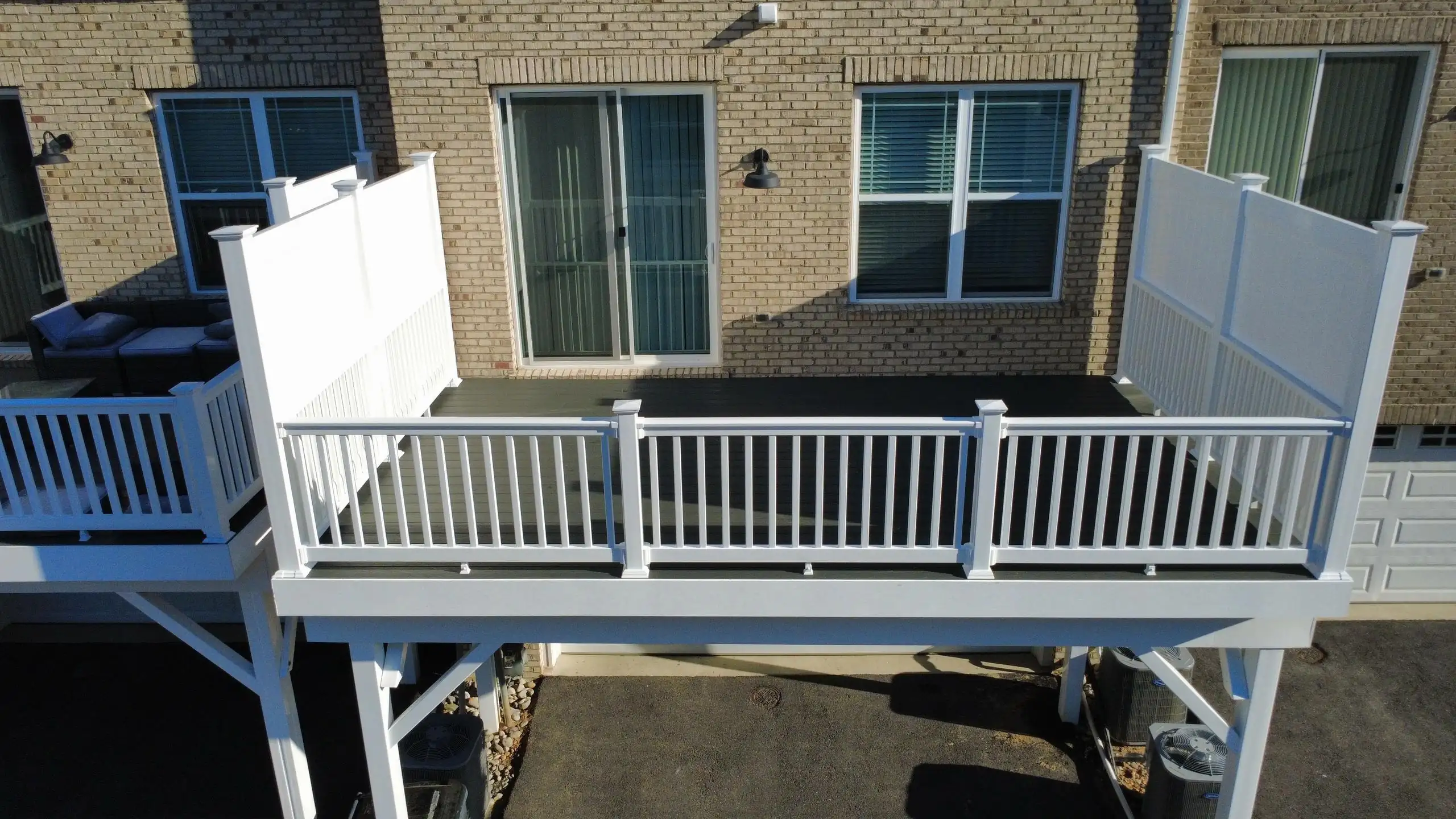
Building a ground-level platform is simpler than a second-story structure. Elevated structures require larger support posts, structural bracing, and stairs with landings. If a crew cannot get a delivery truck into your backyard, manual labor costs will rise.
3. Permits and Regulations
Maryland counties have stringent safety codes. You pay for the labor to draft site plans, file paperwork, and wait for inspectors.
Technical Specifications: What is Beneath the Boards?
Pricing is not just about the visible surface; it is about the structural engineering that keeps your deck safe. In the Mid-Atlantic, we follow specific framing standards to ensure longevity.
- Joist Spacing: For standard pressure-treated wood, joists are typically spaced 16 inches on center. However, high-quality composite manufacturers like Trex or TimberTech often require 12-inch on-center spacing for a firmer feel and to prevent “bouncing”.
- The Frost Line: In Howard and Anne Arundel counties, concrete footings must reach below the 30-inch frost line. If footers are too shallow, winter “heaving” will cause your deck to lean and the ledger board to pull away from your house, creating a major safety risk.
- Flashings and Fasteners: We use specialized joist flashing to protect the tops of wooden beams from moisture trapped under composite boards. Additionally, all hardware must be triple-coated galvanized or stainless steel to resist the corrosive nature of modern ACQ pressure-treated lumber.
Estimated Cost Breakdown (2025–2026 Data)
Based on recent local projects and industry averages, here is the financial landscape for standard deck sizes in the Maryland and Pennsylvania region.
| Deck Size | Pressure-Treated Wood | Standard Composite (Trex/Fiberon) | Premium PVC (Azek/TimberTech) |
| Small (12′ x 12′) | $5,500 – $9,000 | $7,500 – $10,000 | $12,000 – $18,000 |
| Medium (16′ x 20′) | $11,000 – $15,000 | $15,000 – $19,000 | $19,000 – $25,000 |
| Large (20′ x 30′) | $22,500 – $28,000 | $30,000 – $38,000 | $40,000 – $50,000 |
Note: Internal data indicates that a typical high-quality project averages approximately $33,000. Second-story height adds roughly 15–25% to these totals.
The Law of the Coin: Addressing the Downsides
To build trust, we must address why a specific material might be wrong for you. Every purchase has two sides.
- Composite Heat: Darker composite boards can become hot to the touch in direct Maryland summer sun. If your backyard has zero shade, you will need lighter colors or footwear.
- Wood Maintenance: Wood will splinter eventually. If you are not prepared to power wash and seal it, the structure will look grey and weathered within three seasons.
- Premium PVC Pricing: PVC is the most durable, but the cost can double that of traditional wood. If you plan to move in a short timeframe, you may not recoup the premium you paid.
Why Are Some Quotes So Cheap?
If you find a quote 30% lower than others, ask why.
- Missing Permits: Some skip the county office. If the county finds out, you may be forced to tear the structure down.
- Sub-Par Footings: Maryland footings must reach below the frost line. Shallow footings cause structures to lean after the first winter freeze.
- Labor Gaps: Rushed work leads to cutting corners, like using the wrong fasteners that rust prematurely.
The ROI of Maryland Outdoor Living
A deck is a value-add, but it is rarely a 100% return on investment. Build for your own enjoyment first. In the Mid-Atlantic, a deck addition typically recoups a high percentage, but not all of its cost upon sale.
Composite appeals to buyers looking for “low-maintenance,” moving homes faster in competitive areas like Columbia or Ellicott City.
The Interactive Design Process
We believe in a “media company” approach to design. Our Interactive Design Process allows you to see your project before the first nail is driven.
- Consultation: We begin by understanding your vision.
- Design: Our team creates a personalized layout tailored to your home’s elevations and needs.
- Refinement: We tweak the design until it aligns with your dream of family hosting and relaxation.
Maryland Decking FAQ
Do I really need a permit for a small deck?
If the structure is attached to your home or elevated, Maryland law requires a permit. We handle the entire permitting process for you to ensure compliance with local codes.
How long does the actual build take?
Our crews are efficient; once we break ground, a standard project is completed in just 1 to 2 days. The total timeline from contract signing to the final walkthrough is typically 1 month.
Is wood or composite better for Maryland weather?
Composite is the winner for the local climate. Maryland’s high humidity causes traditional wood to warp and crack, whereas brands like Trex and TimberTech stay stable for decades.
Can I build over my existing concrete patio?
We regularly build over existing concrete using specialized low-profile framing. This requires proper ventilation to prevent joist rot.
Will an HOA reject my composite color?
Most Maryland HOAs have guidelines for materials. We collaborate with you to provide the documentation and samples needed for quick approval.
Making an Informed Decision
Buying a deck is a major financial event. You deserve a process that removes guesswork. At Pilgrim Deck & Fence, we follow a transparent approach, showing you exactly why one material costs more than another.
Our mission is to bring satisfaction to every homeowner by delivering quality work with absolute transparency. We don’t just build structures; we build trust through honest communication and reliable service.
Ready to see the real numbers for your property? Visit our Free Estimate Page to schedule your interactive design consultation. We will walk through your yard, check your elevations, and give you a real number, not a guess.
Learn More About Us:
- Our Services: Explore Decks, Fencing, and Outdoor Living Structures.
- Custom Deck Construction: View our specialized deck offerings in Maryland.
- About Our Team: Meet Luis, Lesly, and the family behind the business.
- Guarantees & Warranties: Review our commitment to your project’s longevity.