Skim first if you want the quick answer.
A deck railing does more than meet code. It shapes the view of the yard and the first impression from the driveway. Pilgrim Deck & Fence has built with aluminum, composite, wood, vinyl, and cable rail, and the right one for your project comes down to the house, the yard, the stair layout, and how much upkeep fits your schedule. Before picking a style, compare material upkeep, sightlines, local code, and how the railing will look from inside the home.

Which Deck Railing Materials Make The Most Sense?
| Railing Material | Good Match For | Watch Before Picking |
|---|---|---|
| Aluminum | Low maintenance, narrow profiles, modern deck railing designs | Can look too plain on ornate homes without the right color |
| Composite | Color coordination with composite decking and fewer chores | Bulkier profiles may reduce open sightlines |
| Wood | Traditional homes, warm texture, classic deck railing ideas | Needs staining, sealing, and closer moisture checks |
| Vinyl | Painted-trim look without the repainting | Post and rail profile is fixed, less room to customize the line |
| Cable rail | Open sightlines, modern builds, unobstructed views | Runs $150 to $230 per linear foot installed, the highest of the group |
Material Notes and Installed Cost
- Aluminum resists rust and suits wooded lots where moisture wears down painted surfaces.
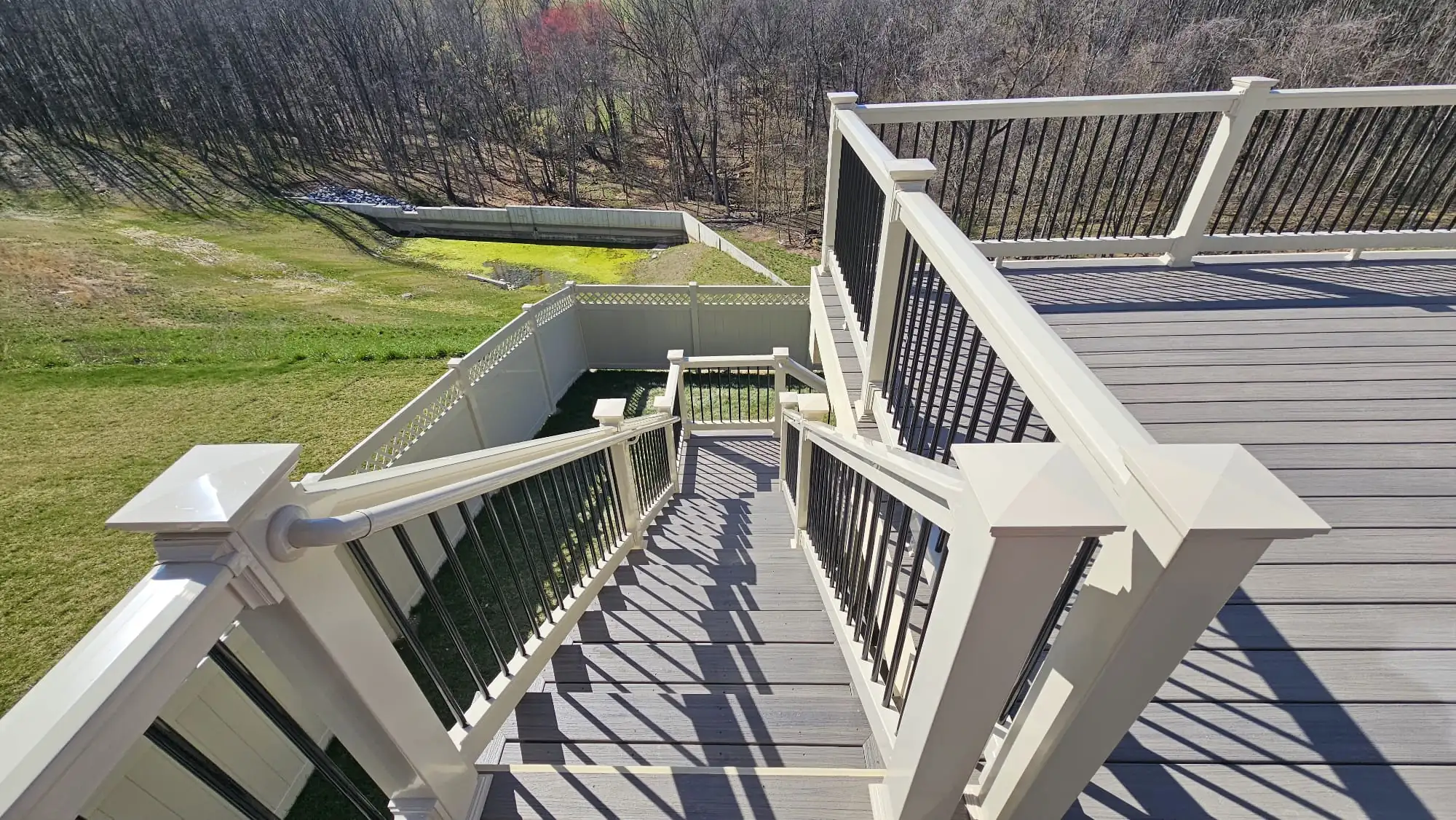
- Composite is most often paired with aluminum balusters in Pilgrim’s Howard County builds, keeping the color-matched look without the bulk of an all-composite rail.
- Wood suits traditional homes but needs ongoing upkeep.
See it in Pilgrim’s work
York, PA: A Fiberon deck build pairs a white vinyl Washington rail with black aluminum balusters and sealed PVC trim, a crisp, classic look that asks almost nothing of the owner year to year.
Frederick, MD: A TimberTech deck build uses black Ultralox Alta cable rail that steps back visually, so the yard stays the focal point instead of the railing itself.
Installed cost per linear foot:
| Material | Cost |
|---|---|
| Wood | $30 to $50 |
| Vinyl | $25 to $50 |
| Aluminum | $50 to $90 |
| Composite with aluminum balusters | $75 to $95 |
| Cable rail | $150 to $230 |
A composite paired with matching composite balusters, instead of aluminum, typically runs less than the figure above. A typical three-sided railing run, 45 to 50 linear feet, totals $1,500 to $10,000-plus, depending on material.
Planning tip: Save railing photos by view type, not just by style name, so the comparison includes the deck view from indoors and from the yard.
Which Railing Style Matches The Deck You Want?
| Goal | Railing Direction | Why It Helps |
|---|---|---|
| Open backyard view | Cable rail or slim aluminum | Reduces visual crowding without blocking sightlines |
| Traditional curb appeal | Wood, vinyl, or composite with a painted look | Pairs well with many Maryland colonial and transitional homes |
| Evening deck traffic | Post cap lighting | Improves visibility at steps, corners, and level changes |
| Color-matched to the deck | Composite top rails | Keeps the railing from competing visually with the decking |
Low-voltage post cap lighting gets wired into the railing posts during installation, so edges stay readable after dark without a separate lighting project added later.
Homeowners sometimes ask about glass panel railings after seeing them elsewhere. That’s not a system Pilgrim has built to date. If an open view is the priority, cable rail is the closer match based on completed work.

What Goes Wrong When Railing Planning Gets Rushed
Code and Safety
Maryland code requires a guardrail at least 36 inches tall on any deck or stair surface more than 30 inches above grade. Balusters and cable spacing must block a 4-inch sphere, and stairs with four or more risers need a graspable handrail. Some jurisdictions allow taller railings, so confirm requirements for the address before finalizing a design.
Attaching to an Old Deck
Existing posts, framing, and attachment points need to be inspected before the new railing goes on. Older framing sometimes needs additional blocking to support the new posts, which a site visit will catch early.
The View From Indoors
A design that feels light from the outside can still look busy indoors if the lines stack against window grids, fence pickets, or tree branches.
Stairs
Transitions, hand placement, and movement patterns are more noticeable on stairs than on a flat deck edge. A concept that works on the main deck can feel awkward exactly where people walk most.
Pro tips for a better railing plan:
- Walk the deck path from the door to the stairs before final material selections.
- Check railing colors next to siding, trim, decking, and fencing.
- Review deck remodeling and resurfacing options if boards or framing already show wear.
Maryland Deck Railing Ideas FAQs
How much does deck railing cost in Maryland?
Costs move with the material. Expect $25 to $95 per linear foot installed for wood, vinyl, aluminum, or composite, and $150 to $230 per linear foot for cable rail, the modern option with the smallest footprint and the biggest price tag.
What is the lowest-maintenance deck railing?
Aluminum and cable rail win this one, both shrug off Maryland humidity without a repaint. Composite runs a close third, though the rails and posts come in a bit wider.
When is a railing required on a deck?
Thirty inches is the number that matters. Once a deck or stair surface clears that height above grade, Maryland code requires a guardrail, no exceptions.
Can new railing go on an older deck?
Usually, yes, once a site visit confirms that the existing posts, framing, and attachment points can support the new railing. Older decks sometimes need extra blocking added before the new posts go in, which the site visit catches ahead of time rather than mid-project.
Does adding a railing trigger a permit review?
Sometimes. Touch the stairs or raise the deck, and a review becomes more likely; swap out the railing alone, and it often doesn’t. Either way, Pilgrim Deck & Fence’s office handles the county paperwork and works through HOA approval, so that part never lands on the homeowner’s plate.
What railing color is safest for resale?
Neutral wins in the long term. Black, white, and bronze read as classic to the next buyer, while a bold color can date a deck faster than the decking itself.
Railings Built With the Same Care as the Rest of Your Deck
A solid railing shapes your daily perspective and sets a welcoming tone for the whole property. Pilgrim Deck & Fence treats every backyard with individual care, relying on decades of honest family experience to select materials that look sharp alongside your siding and landscaping. Let the local crew handle the heavy lifting, from initial layout design down to the county permit paperwork.
Connect directly with us online to discuss ideas for your next project!