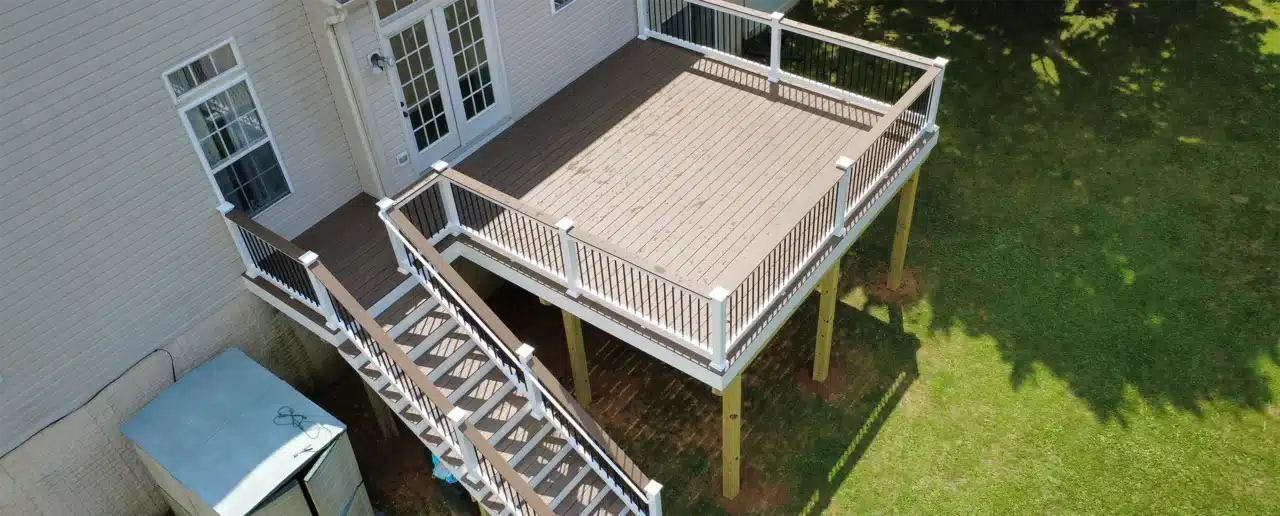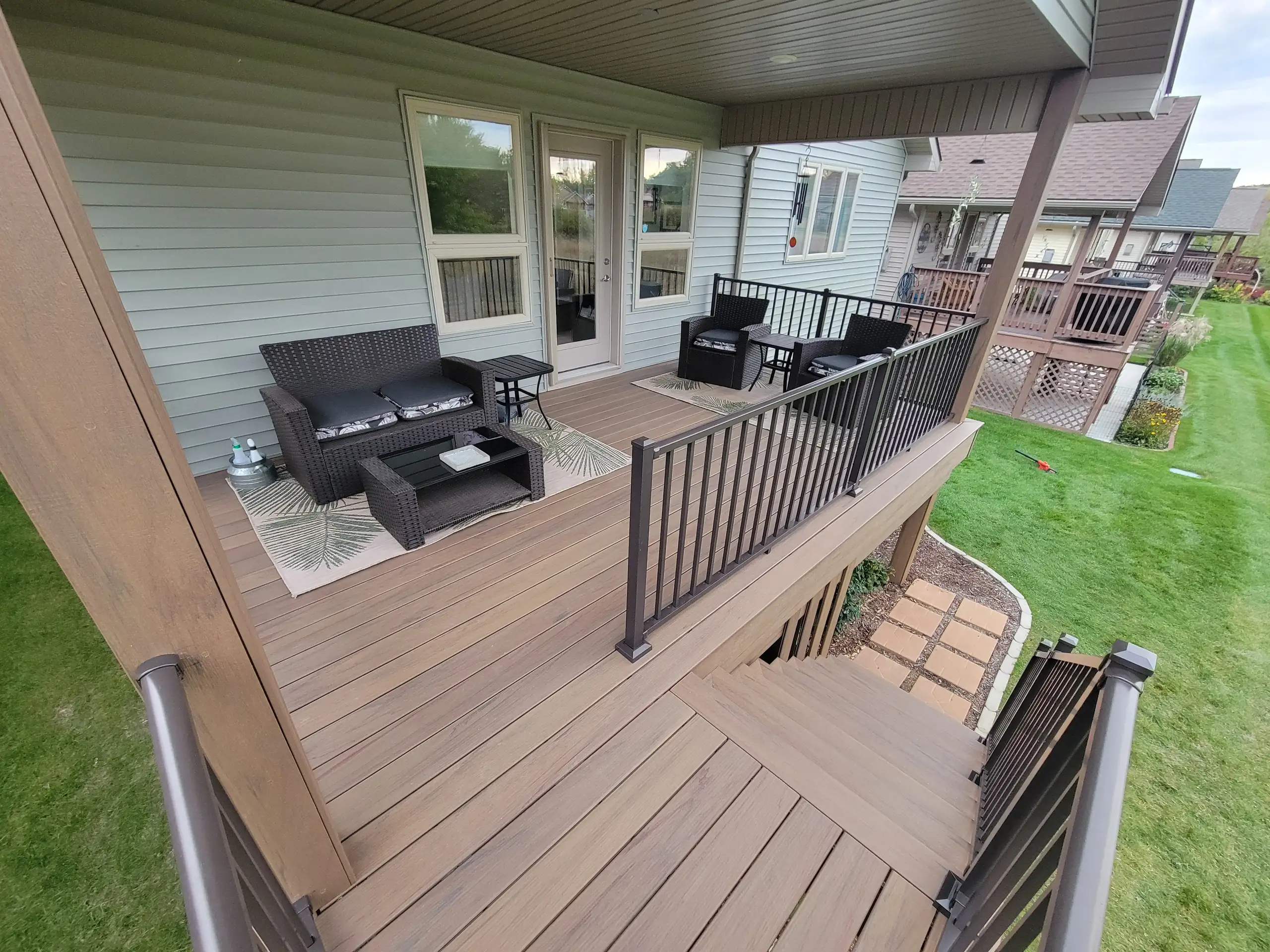
This is a quick guide for homeowners who want a straight answer before reading further. The core question in the composite decking vs wood decking debate often comes down to how much time and money you are willing to spend after the deck is built. Composite decking requires far less upkeep than wood and holds up significantly better in Maryland’s humidity, mold-prone summers, and freeze-thaw winters. Wood costs less upfront but requires consistent maintenance to remain structurally sound.
Choose Composite If: You want low-maintenance decking, plan to stay in the home long-term, or have a south-facing yard with heavy sun exposure.
Choose Wood If: You are working with a tight upfront budget, building a temporary structure, or strongly prefer the natural character of unfinished lumber.
Choosing between composite decking and wood decking is one of the most common decisions Maryland homeowners face. Pilgrim Decks and Fence builds across Howard County, Frederick, Columbia, Ellicott City, Laurel, and York, PA, where humid summers, saturating fall rain, and winter freeze-thaw cycles punish outdoor surfaces. The material you choose needs to handle it all without requiring a weekend of maintenance every spring.
How Do Composite and Wood Decking Really Perform in Maryland’s Weather?
Maryland exposes material weaknesses more quickly than dry or mild climates do. How each material handles those conditions is where the real difference shows up.
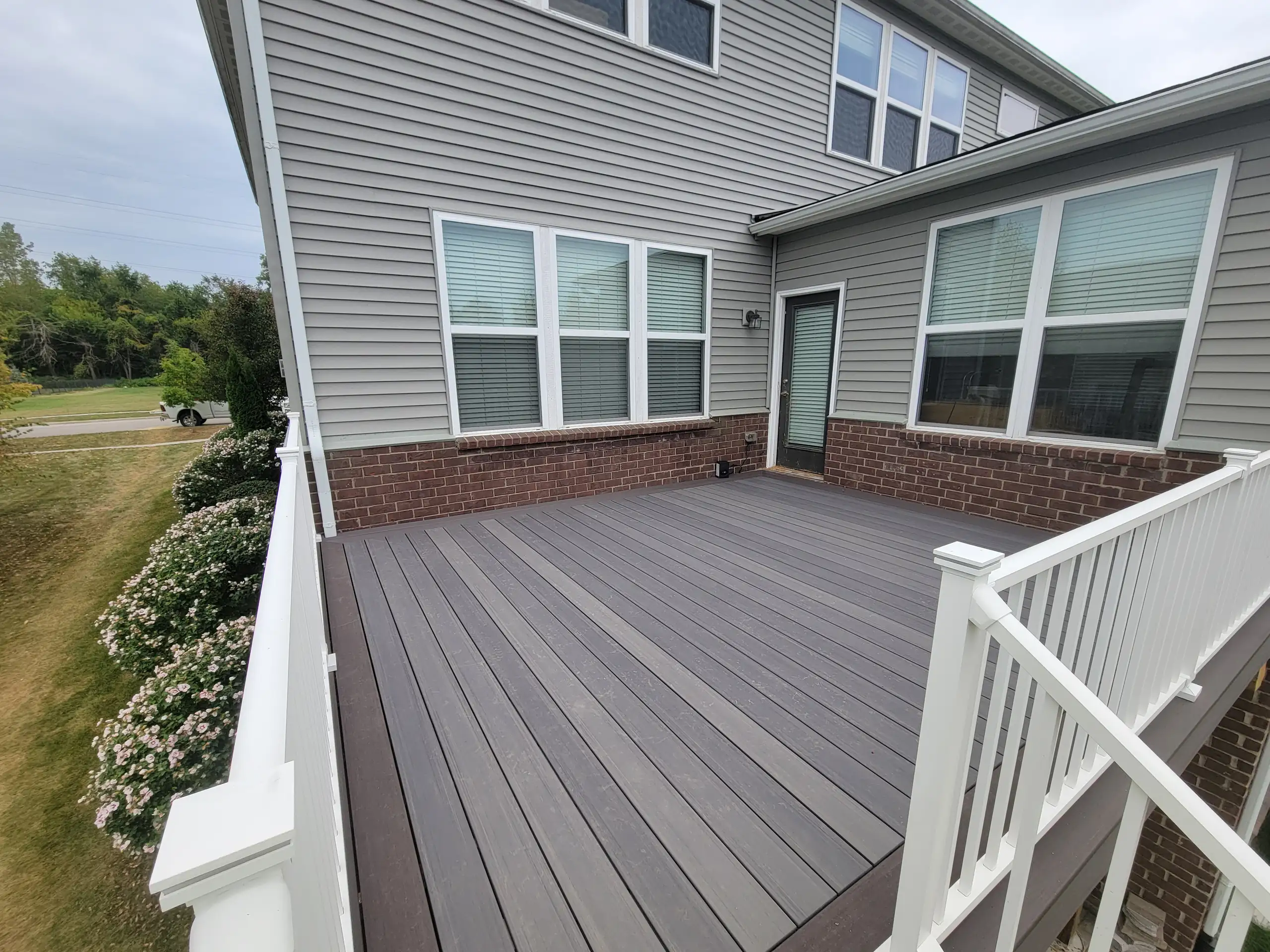
- What Composite Is Made Of: Composite decking is an engineered product, not simply a plastic board. Capped wood-plastic composites like Trex, TimberTech, Fiberon, and Deckorators combine a wood-fiber or mineral core with a polymer outer shell that blocks moisture, resists mold, and prevents splintering.
- How Wood Behaves in Humidity: Pressure-treated lumber is widely available and affordable, but wood fibers continuously absorb and release moisture. In shaded Howard County yards or low-lying areas near streams, that cycle accelerates surface mold, board cupping, and eventual rot if maintenance falls behind.
- Freeze-Thaw Stress: Water trapped inside wood fibers expands when temperatures drop below freezing and contracts when they rise. Over several winters, that stress causes boards to crack, splinter, and loosen fasteners.
- Surface Safety and Comfort: Composite boards resist splintering and remain structurally stable through the seasons. Some darker composite colors absorb more heat on south-facing decks, so lighter colors or PVC options are worth considering if heat underfoot is a concern.
| Feature | Composite Decking | Pressure-Treated Wood |
|---|---|---|
| Moisture Resistance | High (capped shell blocks absorption) | Low to moderate (absorbs and releases) |
| Mold and Mildew Risk | Low | High without regular sealing |
| Freeze-Thaw Durability | Strong | Vulnerable to cracking over time |
| Splinter Risk | None | Moderate to high as wood ages |
| Appearance Over Time | Consistent color and texture | Grays and weathers without treatment |
For brand-specific lifespan data on products like Trex, TimberTech, and Fiberon, see our detailed guide on how long composite decking actually lasts in Maryland.
Pro Tip: If your deck sits under tree cover, budget extra time for debris removal regardless of material. Leaves and pollen trapped against any board accelerate moisture problems, but composite recovers from a hose-down where wood often needs full cleaning and resealing.
What Will I Really Spend Over Time on Composite vs Wood Decking?
The upfront cost of composite decking is higher than that of pressure-treated wood, and that gap is real. What changes the picture is what happens in years 2, 5, 10, and beyond.
- Upfront Investment Difference: Composite boards, hidden fastener systems, and the engineered components involved in a composite build push starting costs higher than a basic wood deck.
- Wood Maintenance Costs Over Time: A wood deck needs cleaning, sanding, and a fresh coat of stain or sealant every two to three years. Each cycle costs money and takes a full weekend, and skipping even one can accelerate deterioration.
- Composite Maintenance Reality: Low-maintenance decking does not mean zero maintenance. Composite requires periodic cleaning with soap and water, but no sanding, staining, or sealing. That difference adds up significantly over a 20-year ownership period.
| Priority | Composite Tends to Fit | Wood Tends to Fit |
|---|---|---|
| Lowest upfront cost | Yes | |
| Lowest long-term cost | Yes | |
| Minimal ongoing maintenance | Yes | |
| Natural wood grain appearance | Modern boards come close | Yes |
| Resale value and buyer appeal | Yes | Depends on condition |
| Short-term or temporary structure | Yes |
Cost Consideration: Wood deck maintenance is easy to underestimate during the buying decision. Two rounds of professional sanding and staining over five years can close a significant portion of the original price gap between wood and composite.
For a detailed breakdown of composite decking costs in Maryland, including material tiers and project size ranges, see our detailed breakdown of composite decking costs in Maryland.
Which Decking Material Is Actually Right for My Home and Lifestyle?
The right material depends on honest answers to a few practical questions about your budget, how you use your outdoor space, and how long you plan to stay in your home. Neither composite nor wood is the right answer for every homeowner in every situation.
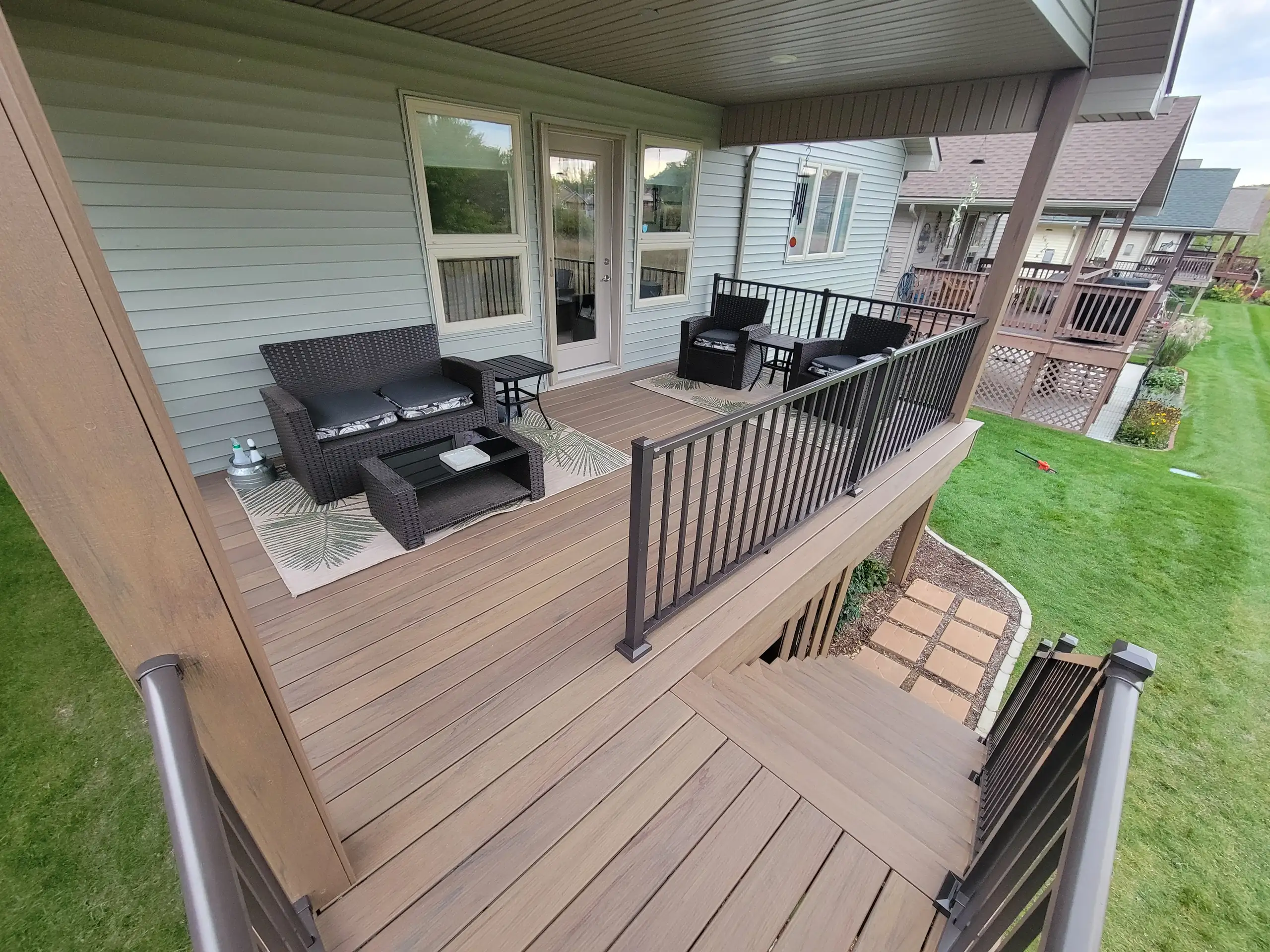
The right material depends on honest answers about your budget, how you use your outdoor space, and how long you plan to stay in your home.
Questions Worth Asking Yourself
How many weekends are you willing to dedicate to deck maintenance each year? Do you want a surface that holds its color and texture without annual treatment? Are you planning to sell in the next five years?
When Wood Still Makes Sense
A homeowner with a tight upfront budget building a basic deck may find wood practical, especially if they commit to a disciplined maintenance schedule. Wood also suits outbuildings, temporary platforms, and projects where natural texture and cost control take priority.
When Composite Is the Stronger Fit
Composite is the better long-term investment for most Maryland homeowners who plan to stay, want a surface that handles humidity and freeze-thaw stress without yearly maintenance, and value a consistent appearance. It is especially well-suited to high-use family decks, pool surrounds, and homes with HOA aesthetic requirements.
Resurfacing an Existing Deck
Some homeowners can save money by resurfacing an existing deck with composite boards rather than rebuilding from scratch. This works only when the existing frame is structurally sound, and a thorough inspection is required first.
Common Mistake
Assuming any existing wood frame is ready for composite resurfacing without a professional inspection. Hidden rot in joists or ledger boards can compromise the entire structure, and no new surface material fixes a failed frame.
Composite Decking vs Wood Decking FAQs
Can you install composite decking on my existing wood deck frame?
Composite boards can be installed over an existing frame, but only after a structural inspection confirms that the joists, ledger board, and posts are free of rot and instability. If significant damage is found, a full rebuild is the recommended course of action.
Does composite decking get hotter than wood in the summer?
Some composite boards, particularly darker colors or denser wood-plastic composites, can retain more heat than natural wood on south-facing decks in full sun. Lighter board colors and PVC-based composites tend to stay cooler.
How long should a composite deck last compared to a wood deck?
A well-installed composite deck from a major manufacturer typically carries a 25 to 30-year warranty. A pressure-treated wood deck can last 15 to 20 years with diligent maintenance, but often shows significant decline by year 10 if maintenance lapses.
Will a composite deck increase my home’s resale value?
Composite decks tend to appeal to buyers because they signal lower future upkeep. The actual return depends on build quality, deck size, and the condition of the rest of the property, but a well-designed composite deck rarely hurts a sale.
Make the Right Call with Pilgrim Decks and Fence
There is no universal answer to the composite decking vs wood decking question, but for most Maryland homeowners weighing real maintenance hours and lifetime costs, composite quietly wins the math.
Pilgrim Decks and Fence specializes in composite deck installation throughout Howard County, Frederick, Columbia, York, PA, and surrounding areas, using trusted brands such as Trex, TimberTech, Fiberon, and Deckorators. Contact us today for a consultation and a personalized material recommendation tailored to your yard and goals.