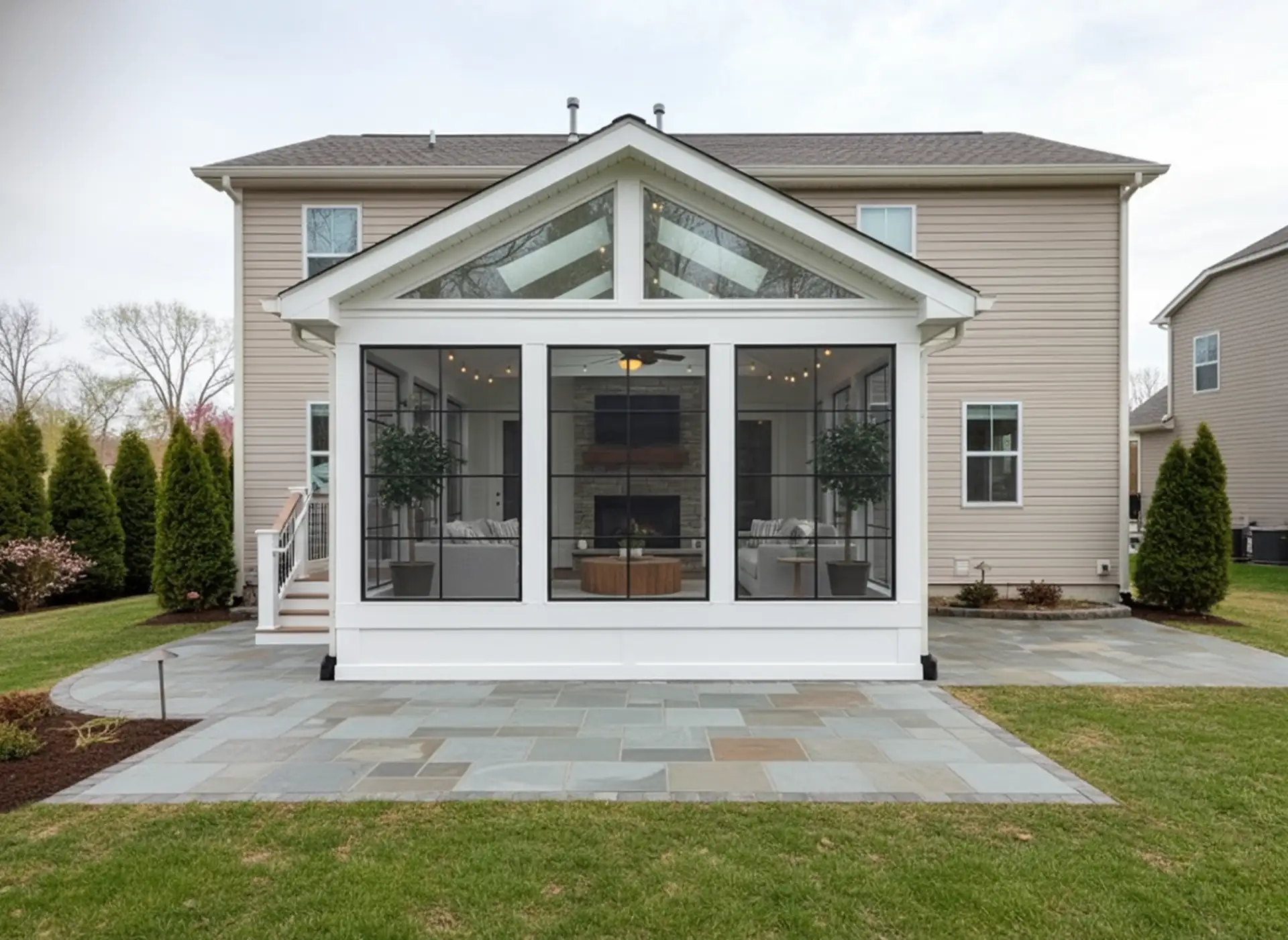
Discover how to incorporate a bright, glass-filled space into a residence that remains comfortable regardless of the outside temperature. Forget about seasonal limitations; the right design and construction principles let you enjoy panoramic views during a winter snowfall or a summer thunderstorm.
We explore innovative 4-season sunroom ideas, ranging from structural additions that increase square footage to sophisticated interior concepts for relaxation and entertaining. Discover how a well-designed sunroom addition can significantly enhance your home’s ambiance.
What is a 4-season Sunroom and How Can It Improve Your Home?
A 4-season sunroom is a home addition designed and constructed to be thermally efficient and habitable through all temperature fluctuations, allowing occupancy in January and July alike.
Structural Requirements:
- It incorporates insulated glass and thermal breaks in the framing.
- It is connected to the residence’s central heating and cooling system.
- It is engineered as an extension of the primary structure, often placed on a full foundation.
The integration of 4-season sunroom addition ideas can significantly enhance the quality of daily living by providing a bright, airy space for activities such as reading, working, or dining. Sunlight exposure has been linked to improved mood and well-being.
Having a dedicated, weather-protected room maximizes access to natural light, even during overcast months. It allows occupants to feel connected to the outdoors without exposure to insects, pollen, or inclement weather.
Advantages of Adding a 4-season Sunroom to Your Home
| Benefit Category | Description | Impact on Residence |
| Increased Square Footage | The room is permanently heated and cooled, and thus counts as official habitable space. | Raises property valuation and expands living area. |
| Light and Atmosphere | Offers maximized natural light compared to traditional rooms. | Creates an airy, cheerful atmosphere and reduces the need for artificial lighting during the day. |
| Weather Independence | Fully insulated and structurally sound against severe weather. | Allows enjoyment of outdoor scenery in all four seasons without discomfort. |
3 Season vs. 4-season: What Separates Them?
The primary difference lies in the level of insulation and the structural components required to handle temperature extremes.
A 3-season sunroom is typically designed for comfort during spring, summer, and fall, but it is not intended for regular habitation in freezing conditions. It typically relies on single-pane glass and aluminum framing without thermal breaks, and may not be directly connected to the primary heating/cooling system.
A 4-season sunroom, by contrast, is built to the same strict codes as the rest of the dwelling.
| Feature | 3 Season Sunroom | 4-season Sunroom |
| Insulation & Glass | Single-pane glass; minimal insulation. | Double/Triple-pane, Low-E glass; fully insulated structure. |
| HVAC Connection | Typically uses portable heaters/fans or no system. | Connected to the home’s central HVAC. |
| Building Code | Less stringent; often non-habitable space. | Built to the same residential codes as the main dwelling. |
4-season Sunroom Design Ideas for Every Home

Incorporating stylish 4-season sunroom design ideas helps confirm the new room looks like an original architectural element of the structure, not an afterthought.
The Modern Farmhouse Retreat
Aesthetic:
This four season sunroom ideas concept pairs white shiplap walls and ceiling panels with industrial elements.
Materials & Structure:
The structure uses black-framed, floor-to-ceiling windows. The flooring is a distressed, wide-plank wood look porcelain tile, offering durability and a rustic feel.
Furnishings:
The furniture consists of simple, upholstered armchairs in neutral linen, creating a bright and airy lounge perfect for reading. A single oversized, industrial-style ceiling fan circulates air.
The Coastal Lanai
Aesthetic:
A design focused on light, airy colors and natural textures to evoke a beach environment.
Materials & Structure:
The room uses light blue or seafoam green accents against white vinyl framing and light wood composite flooring. Rattan furniture with thick, washable cushions dominates the space.
Function:
A sheer, ceiling-mounted curtain system allows light filtering on intensely sunny days. The roof can be a polycarbonate structure or a traditional shingled roof with skylights to control summer heat exposure.
4-season Sunroom Addition Ideas to Maximize Your Space
When planning a 4-season sunroom addition project, it is paramount to consider how the new space connects to and extends the existing residence.
Kitchen Extension Dining Nook
Instead of building a separate, detached room, one common approach is to remove an exterior wall section of the kitchen and extend the square footage into the sunroom.
Function:
The addition becomes the new breakfast or main dining area. Glass walls on three sides of the extension provide panoramic views while eating.
Seamless Integration:
The kitchen’s flooring and cabinetry should continue into the new room for a cohesive appearance. The addition provides maximum return on investment and greatly improves the kitchen’s functionality.
The Main Bedroom Sitting Area
For a luxurious addition, consider constructing a sunroom off the main bedroom suite. The space becomes a private sanctuary, a sitting area completely enclosed by glass.
Function:
It offers a quiet place for morning coffee or evening reflection, separate from the main sleeping area.
Privacy Solution:
Privacy can be maintained employing motorized blinds or specialized electrochromic glass that tints on command.
4-season Sunroom Ideas for Relaxation and Entertainment
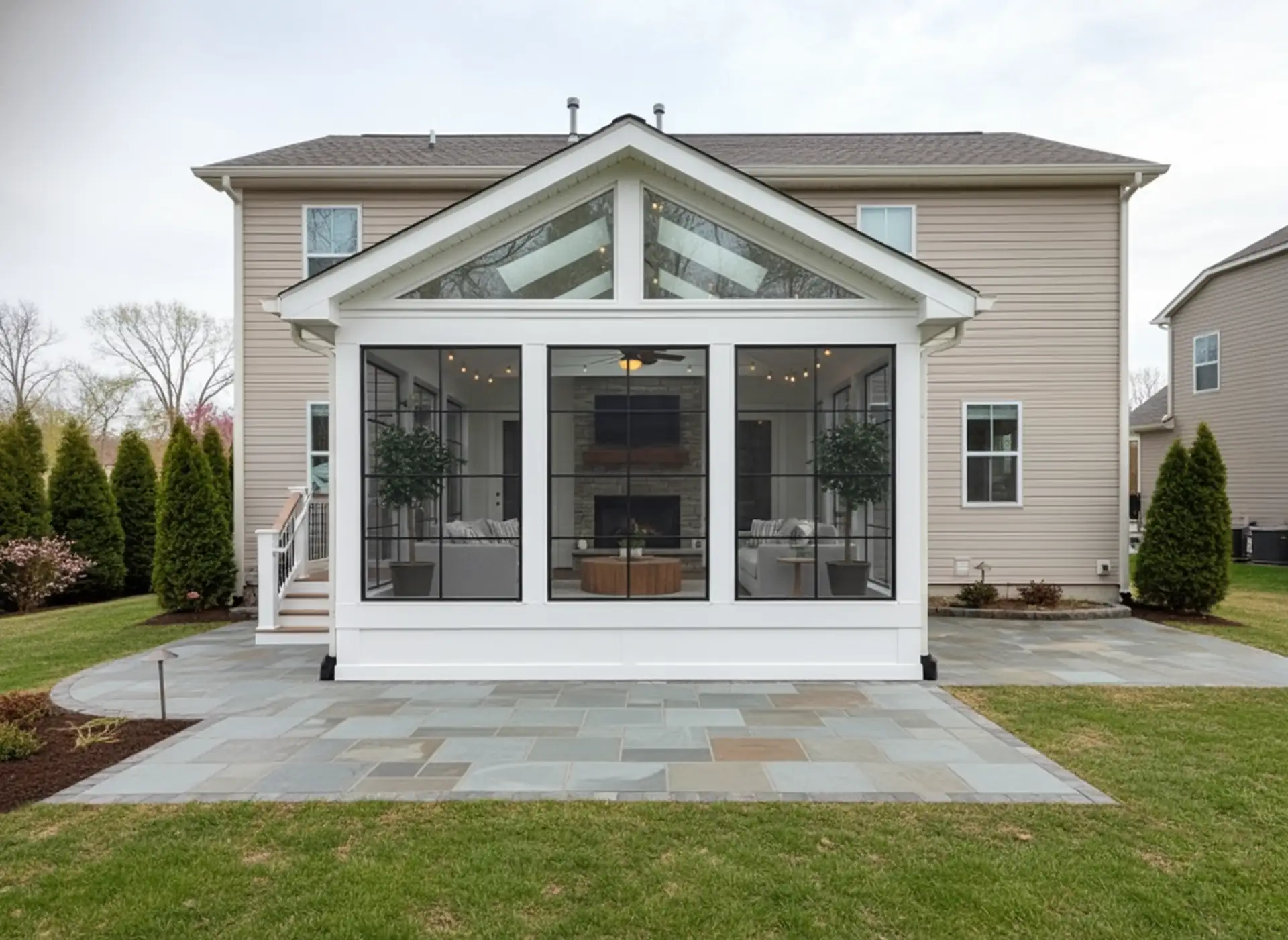
A four-season sunroom ideas plan must consider the primary purpose—whether it’s a tranquil spot or a lively area for hosting guests.
The Indoor Garden/Conservatory
The 4-season structure provides the perfect environment for plants that require consistent light and temperature.
Materials & Structure:
Install slate or stone flooring to manage watering spills. Drainage systems can be included if possible.
Function:
Tiered shelving and hanging hooks enable vertical gardening, creating an authentic conservatory feel. The room works well for individuals who appreciate horticulture and a peaceful, nature-filled environment.
The Media/Game Lounge
Given the protection from the elements, a 4-season sunroom can house electronics like a television or gaming console, which would be unsuitable for a 3-season porch.
Technical Requirements:
The walls require adequate wiring for electrical outlets and cable.
Function:
Plan for retractable exterior screens or internal blackout shades to minimize glare during daylight hours when watching a screen. Durable, spill-resistant materials are recommended for seating in entertainment spaces.
Innovative 4-season Sunroom Designs for Different Styles and Needs
Innovation in sunroom design often involves integrating architectural style with technology.
The Passive Solar Design
Orienting the sunroom to maximize solar gain during the winter months and minimize it during the summer requires careful planning.
Function:
This involves calculating the sun’s angle and employing overhangs or adjustable louvers on the roof.
Materials & Structure:
The floor can be made of thermal mass materials (like stone or concrete) that absorb daytime heat and release it slowly at night, naturally stabilizing the room’s temperature. The result is a highly efficient design choice.
The Atrium Entrance
A unique approach is to construct the sunroom as an enclosed, glass-roofed atrium that serves as the main entrance or connector between the different wings of the residence. This floods the interior of the house with natural light while providing a stunning, dramatic entry sequence.
The design works exceptionally well for residences with large or complex footprints.
4-season Sunroom Ideas for Homes with Stunning Views
The best sunrooms are those that highlight the existing environment. When the residence has a spectacular view—be it a waterfront, mountain range, or city skyline—the sunroom design must be minimized to avoid distraction.
Frameless Glass Box
The ultimate in view-centric design. This method utilizes structural silicone and minimal hardware, nearly eliminating the window frames. The result is a nearly uninterrupted panoramic wall of glass.
Technical Requirement:
Such construction requires specialized, heavier glass and expert installation to ensure structural integrity and proper insulation.
Interior Focus:
The interior décor should be sparse and low to the ground to keep the line of sight clear.
Why Choose Pilgrim Deck and Fence for Your 4-season Sunroom Addition?
Selecting the right partner for a substantial construction project like a 4-season sunroom addition is critical.
Pilgrim Deck and Fence operates on principles of precision engineering and clear client communication. Our teams specialize in creating integrated sunrooms that adhere strictly to local building codes, guaranteeing the room is structurally sound and thermally efficient.
Our Service Promise:
- We manage the entire process, from initial conceptual drawings and obtaining necessary permits to final construction.
- We prioritize materials that ensure longevity, such as commercial-grade, thermally broken aluminum framing and high-performance, Low-E glass packages.
- Our construction methods prevent water intrusion and condensation, protecting your investment.
When you partner with us, you invest in a permanent, high-quality structure that adds value and enjoyment to your residence.
Frequently Asked Questions
What to do with a 4-season room?
The room serves as a climate-controlled, habitable space suitable for various purposes. Popular uses include a home office, dining area, art studio, or media lounge. Since the temperature is stable, sensitive upholstered furniture and electronics can be safely installed.
Do sunrooms require a foundation?
Yes, a true 4-season sunroom requires a full foundation (slab, crawl space, or basement). This must extend below the frost line. The foundation is necessary for connecting the room to the primary HVAC system and classifying it as habitable space.
What are the disadvantages of a sunroom?
The primary disadvantages are the initial cost and managing solar heat gain. This challenge is mitigated by proper design, such as roof overhangs and dedicated HVAC zoning. Even with high-performance glass, the large surface area can lead to excess heat in summer.
What happens if you build a sunroom without a permit?
Building an addition without permits is a serious risk. Consequences include costly fines and mandatory demolition of the unpermitted structure. Furthermore, it complicates your homeowner’s insurance and can devalue the property during resale.
Is it cheaper to build a sunroom or an addition?
A 4-season sunroom can be slightly more economical than a traditional stick-built addition. This is due to the faster installation of prefabricated framing and glazing systems. However, the final cost is heavily influenced by the quality of the thermal glass package selected.
Can I put regular furniture in a sunroom?
Yes, absolutely. The climate control of a 4-season room eliminates the humidity and temperature swings that damage standard upholstered furniture. Since the room is fully conditioned, standard sofas and wooden items are safe to install.
Your Sunroom Project Starts Now
A 4-season sunroom addition provides permanent enjoyment and increased living area. The proper structure offers utility and views through every season.
Ready to discuss your custom design and receive an accurate cost breakdown?
Stop Waiting: Build Your Sunroom with Pilgrim Deck and Fence!